
Oral and dental health in childhood forms the basis of healthy habits that last a lifetime. Oral care, which begins when the first teeth appear, matters not only for preventing tooth decay but also for healthy eating, speech development and the protection of overall oral health.
So when should children start brushing, why should baby teeth be protected, and when should a child have a first dental check-up?
In this article we cover the key points parents need to know to protect their children's oral and dental health.
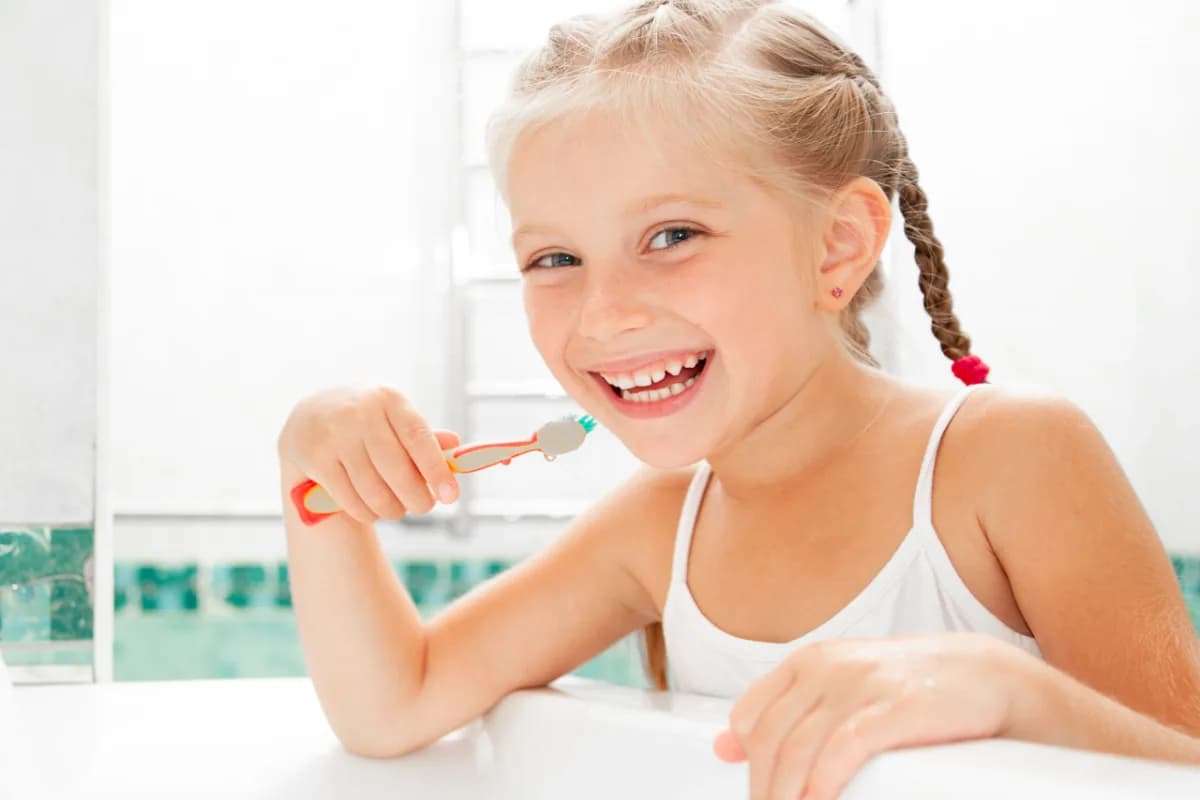
Children learn to brush most easily by watching their parents.
When Should Dental Care Start in Children?
Oral care for children can begin in infancy, before the first tooth even appears. While the teeth have not yet come through, the gums can be gently wiped with a clean, damp cloth or a suitable oral cleaning device.
Once the first baby tooth appears, a soft-bristled toothbrush suitable for the child's age should be used. During this period it is important for parents to clean the teeth themselves and to make oral care a regular habit for the child.
Oral care started at an early age makes it easier for children to get used to cleaning their teeth and helps them develop healthy habits as they grow.
Brushing children's teeth: by age
How Many Times a Day Should Children's Teeth Be Brushed?
Children's teeth should be brushed twice a day, in the morning and in the evening, from the time the first tooth appears. Cleaning the teeth before bed is particularly important for preventing tooth decay.
Because children's manual skills and brushing technique develop with age, parents need to help them through this process.
Even once a child has started to brush their own teeth, brushing should continue under parental supervision to make sure all surfaces are cleaned properly. The age at which a child can clean their teeth effectively varies according to individual development.
How to Choose the Right Toothbrush and Toothpaste for Children
Choose a soft-bristled brush with a small head that suits the child's age.
Because children's mouths are different from adults', age-appropriate products should be chosen when selecting a toothbrush and toothpaste.
When choosing a toothbrush, look for one that:
Has soft bristles,
Has a small head,
Fits comfortably in the child's mouth,
Has a handle that is easy to grip.
When choosing toothpaste, products containing fluoride should be preferred. Fluoride helps strengthen tooth enamel and prevent the formation of decay.
The amount of toothpaste should be adjusted to the child's age:
For children under 3, a smear about the size of a grain of rice,
For children aged 3–6, a pea-sized amount of fluoride toothpaste should be used.
Parental supervision is important so that young children do not swallow toothpaste. The most suitable product and amount for a child's individual needs can be assessed by a dentist.
Why Are Baby Teeth Important?
Baby teeth guide the permanent teeth into the correct position.
Although baby teeth are temporary, they play important roles in a child's development. They are involved in chewing, speech and helping permanent teeth come through in the correct position.
Losing baby teeth early can, in some cases, affect the eruption pattern of the permanent teeth and may lead to orthodontic problems later on.
For this reason, the aim is to treat baby teeth when they decay and to keep them in the mouth until they fall out naturally, wherever possible.
Decay in baby teeth that is left untreated can cause pain, infection and difficulty eating. Regular dental check-ups are important even if the child has no complaints.
How Can Tooth Decay Be Prevented in Children?
Tooth decay in children can develop, in particular, as a result of frequent consumption of sugary foods and drinks and inadequate oral hygiene.
To reduce the risk of decay, parents need to pay attention to daily habits.
Tips that help prevent tooth decay:
Brush the teeth regularly in the morning and evening.
Use fluoride toothpaste in an amount suitable for the child's age.
Limit sugary snacks and drinks.
Avoid frequent sugary foods between meals.
Encourage the child to drink enough water.
Do not neglect regular dental check-ups.
In particular, children falling asleep with sugary drinks or keeping a feeding bottle in the mouth for long periods can pose a risk for early childhood caries.
Dental Care for Children: How to Build a Brushing Habit
It is important that children see tooth brushing not as a chore but as a natural part of daily life. Building this habit early helps keep up regular oral care later on.
Parents can try the following approaches:
Set an example: Children learn by imitating their parents. Brushing together can turn oral care into a fun family routine.
Make it fun: Brushing to a favourite song or using timers designed for children can make it easier to complete the recommended brushing time.
Let them choose the products: Letting the child pick a toothbrush in a colour or with a character they like can increase their interest in dental care.
Be patient: A child's brushing skills develop over time. Instead of a punishing approach to mistakes, an encouraging attitude should be adopted.
When Should Children Have Their First Dental Check-Up?
The first dental check-up is also an important opportunity for the child to get used to the clinic.
A child's first dental check-up should take place within six months of the first baby tooth appearing, or by the age of one at the latest.
Check-ups at an early age make it possible to monitor tooth development, assess the risk of decay and give parents information about correct oral care.
It is not the right approach to make the first dental visit only when pain or decay appears. Regular check-ups carried out as part of preventive dentistry help detect possible problems at an early stage.
How often a child should be seen is determined by the dentist according to the child's oral health and risk of decay.
How to Prevent Fear of the Dentist in Children
Some children may feel anxious during dental visits. Parents' attitude and how the first check-up is experienced play an important role in preventing this.
Before taking the child to the dentist, it helps to avoid frightening language, not to present procedures as a threat, and to describe the check-up as a positive experience.
Dentists experienced in paediatric dentistry can communicate in a way that suits the child's age and stage of development, helping them feel more comfortable during the check-up.
A comfortable first experience positively influences the child's attitude to later check-ups.
Children's Dental Care and a Healthy Smile with Parla Dental
Protecting children's oral and dental health starts with the right habits formed at an early age. Regular tooth brushing, healthy nutrition and dental check-ups can support children's oral health.
At Parla Dental, in our clinic in Akhisar, we offer examination and treatment services aimed at protecting children's oral and dental health. To have your child's dental development monitored and to get information about oral health, you can contact us and make an appointment for an examination.