Short answer: The recommended age for a child's first orthodontic check-up is 7. The American Association of Orthodontists (AAO) recommends that children have their first orthodontic check-up by the age of 7 at the latest. This check-up does not always mean braces will be fitted. In most children, development is simply monitored; if treatment is needed, the dentist decides the right time.
Are your child's teeth coming through crooked, does the lower jaw sit forward, or do they sleep with their mouth open? The answer to these questions is usually in the same place: an early orthodontic check-up.
In this article we explain when orthodontics for children begins, what is assessed at the age 7 check-up and which signs call for an examination without waiting.
What Are Orthodontics and Orthodontic Guidance in Children?
Orthodontic guidance means monitoring a child's tooth and jaw development throughout the growth period. The aim is to notice a problem before it develops or grows.
During this process the dentist looks at:
In what order and in which direction the permanent teeth are coming through
Whether there is enough space for the permanent teeth
Whether the lower and upper jaws are growing in harmony with each other
How the upper and lower teeth meet when the teeth close
Habits that can affect tooth alignment, such as thumb sucking and mouth breathing
Guidance does not mean treatment. Most of the time it consists of check-ups at set intervals.
Why Is the First Orthodontic Check-Up Recommended at Age 7?
Around the age of 7, the mouth contains both baby teeth and the first permanent teeth. The first permanent molars and the front incisors begin to come through at this stage.
This mixed picture shows the dentist a great deal. How the teeth close, the position of the jaws relative to each other and whether there is room for the permanent teeth can now be assessed.
Around age 7, baby teeth and the first permanent teeth are present together.
For this reason the American Association of Orthodontists (AAO) recommends that the first check-up take place by the age of 7 at the latest. The same source also adds an important note: if you notice a problem, you do not need to wait until age 7.
Are Braces Fitted at Age 7?
Generally, no. The purpose of the age 7 check-up is not to start treatment but to see how things stand.
Early intervention may be recommended for some children. For example, conditions such as a crossbite or a marked narrowing of the jaw can be managed more easily during the growth period. This intervention is often not traditional braces but appliances such as removable appliances or space maintainers.
For the remaining children, the dentist recommends check-ups at set intervals and decides on the timing of treatment later, if it is needed.
Orthodontics for Children by Age: What Is Looked at in Each Stage?
Every child's development is different. The summary below offers a general framework, not a fixed timetable.
Each child's tooth and jaw development progresses differently.
Ages 6–7: The first permanent molars and front incisors come through. At the check-up the bite, crossbite, lack of space and habits are assessed.
Ages 8–10: Baby and permanent teeth are present together (mixed dentition). Whether early intervention is needed and how the jaws are developing are assessed.
Ages 11–14: Most of the permanent teeth have come through. Planning of comprehensive treatment such as braces or clear aligners comes onto the agenda.
Signs that your child needs an orthodontic check-up
What Signs Call for an Orthodontic Check-Up in Children?
If you notice any of the following, it makes sense to book an appointment without waiting until age 7. Some of the list overlaps with the signs the AAO publishes for parents.
Baby teeth falling out much earlier or later than normal
Permanent teeth coming through crooked or overlapping
The lower or upper jaw sitting noticeably forward or back
The upper teeth sitting inside the lower teeth when the teeth close (crossbite)
Pain or difficulty when chewing or biting
Frequent cheek biting
Mouth breathing, sleeping with the mouth open
The jaw shifting to one side when closing, or a clicking sound in the jaw
Thumb sucking that continues after age 4–5
Noticeable facial asymmetry
Having one of these signs does not mean treatment is needed. But it does mean a dentist should take a look.
What Are the Benefits of an Early Orthodontic Check-Up for Children?
Jaw development is seen in good time. If a difference in development between the lower and upper jaws is noticed while the bones are still growing, there are more management options.
An early check-up makes it possible to monitor development during the growth period.
Lack of space is noticed in advance. If there is not enough room for the permanent teeth, this is usually seen during the mixed dentition period. If a baby tooth is lost early, measures such as a space maintainer may be considered.
Habits are noticed. Prolonged thumb sucking and mouth breathing can affect the position of the teeth. Noticing them early makes guidance easier.
Treatment timing is planned correctly. An early check-up clarifies at what stage treatment should begin, if it is needed.
It is worth being honest here: early intervention does not remove the need for braces later in every child. Some children may need a second phase of treatment during adolescence.
What Happens at an Orthodontic Check-Up for Children?
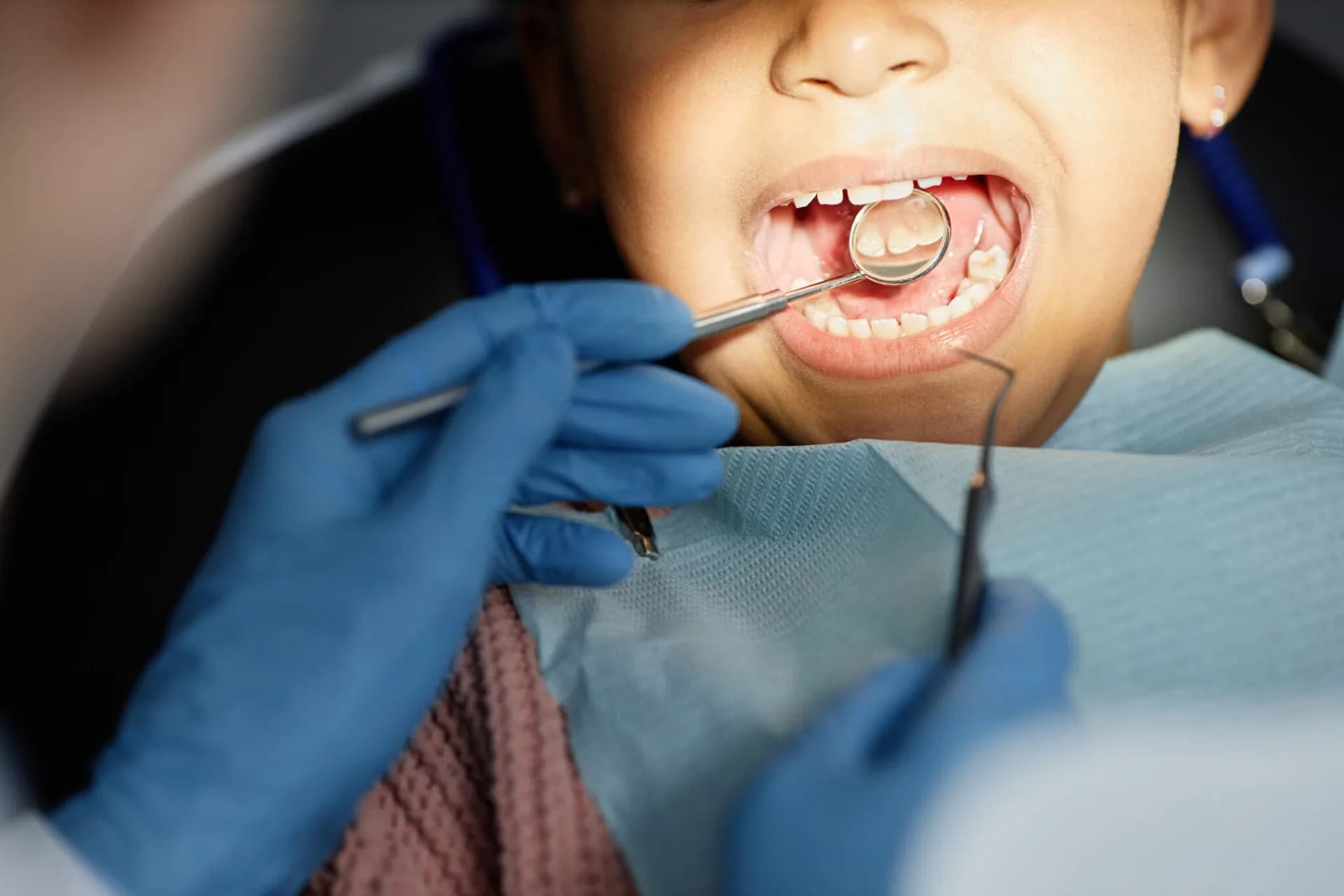
1. Clinical examination: The alignment of the teeth, the bite, and the jaw and facial structure are examined.
2. Development assessment: The condition of the baby and permanent teeth is checked. X-rays are requested if necessary.
3. Plan: If there is no problem, the interval between check-ups is set. If there is a problem, options suitable for the child's age and development are discussed with the family.
At the check-up a clinical examination comes first, and an X-ray is requested if necessary.
The methods that may be used include space maintainers, removable appliances, appliances aimed at jaw development and, at a suitable age, fixed braces. Which one is chosen is decided according to the result of the examination.
Orthodontics for Children: Does a Narrow Jaw Correct Itself?
This is one of the questions parents ask most often. The short answer: it is best not to count on it.
Some tooth movements may correct themselves with growth. But a true narrow upper jaw or a crossbite generally does not correct itself. This is easier to manage while the upper jaw is still growing, which is why an early check is important.
Do You Need to Wait for All the Permanent Teeth to Come Through Before Orthodontics?
For a check-up, no. For treatment, it depends on the situation.
Jaw and bite problems can be managed better during the growth period. For problems involving only the alignment of the teeth, it may be possible to wait until most of the permanent teeth have come through. A check-up is still needed to make this distinction.