
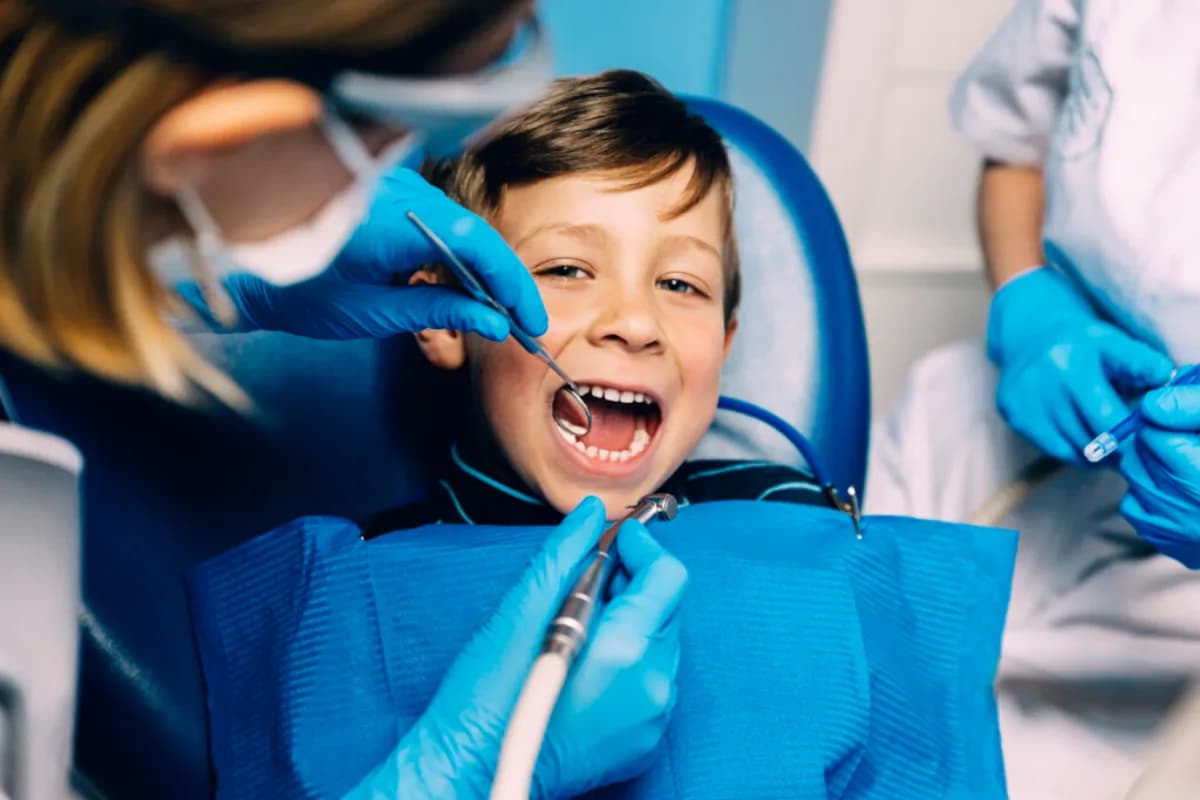
A tooth-brushing habit is easier to build when it is done together with a parent.
Children's oral and dental health often only starts to be taken seriously when the first toothache appears. Yet the foundation of a healthy mouth is laid through small but regular steps taken from the moment the first teeth come through. Neglecting baby teeth because they are temporary can later affect both oral health and the development of the permanent teeth.
The tooth-brushing habit acquired in childhood concerns not only today's teeth but also future oral and dental health. With regular care, a balanced diet and dental check-ups at the right time, many problems can be noticed before they even begin.
So when should dental care start for children? Why are baby teeth so important? When should the first dental visit take place? How can children be helped to enjoy brushing their teeth?
Let's take a look at the common questions about children's dental health together.
When Should Dental Care Start for Children's Dental Health?
Oral care for children can actually begin without waiting for the first tooth to appear. Keeping the mouth clean during infancy can make the transition to an oral care routine easier later on. Once the first teeth come through, it is important to establish a care routine suited to the child's age and needs.
Although baby teeth are temporary, they play an important role in children's oral health. Besides helping with chewing, they also contribute to speech development and to preserving the space needed for the permanent teeth. For this reason, decay in baby teeth should not be dismissed as unimportant.
It may take time for children to acquire the habit of brushing their teeth. Parental support is especially important at young ages. Even when a child brushes on their own, it may be necessary to check whether they are cleaning thoroughly enough.
Oral care should begin as soon as the first baby tooth comes through.
Turning Tooth Brushing into a Routine
Rather than presenting tooth brushing to children as an obligatory chore, it can be more effective to make it a natural part of the daily routine. Regular care at set times in the morning and evening helps the habit settle over time.
Using a toothbrush featuring a favourite character, brushing together, or using a small timer can also make the process more enjoyable for children.
What matters here, however, is not only how long the brushing lasts, but that it is carried out regularly and correctly.
Preventive dentistry for children
Why Are Baby Teeth So Important for Children's Dental Health?
Baby teeth are important for chewing, speech and the positioning of the permanent teeth.
The idea that “baby teeth will fall out anyway, so they do not need treatment” is one of the most common misconceptions about children's dental health. Baby teeth stay in the mouth for a certain period and take on important roles in the child's daily life during that time.
When decay in baby teeth progresses, it can lead to problems such as pain, sensitivity and infection. A child with severe toothache may have difficulty eating, sleeping or carrying on with daily activities.
In addition, losing baby teeth early can in some cases affect how well the space for the permanent teeth is preserved. For this reason, when decay or another problem is noticed, it is more appropriate to have a dentist assess it rather than waiting with the thought that “it will fall out anyway”.
Noticing tooth decay in children at an early stage can help bring the problem under control before it progresses.
How Does Tooth Decay Develop in Children?
Tooth decay can develop over time as bacteria in the mouth are affected by the environment created together with food. Frequent consumption of sugary foods and drinks, together with insufficient cleaning of the teeth, can increase the risk of decay.
It is not only the amount of sugar consumed that matters, but also how often it is consumed. Constant snacking throughout the day can expose the teeth to an acidic environment again and again.
For this reason, regular oral care, a review of eating habits and, when needed, a dental check-up should be considered together.
Frequent consumption of sugary foods and inadequate brushing increase the risk of decay in children.
When Should the First Dental Visit Take Place for Children?
A dental visit is not something that should only happen once pain starts. Following the development of children's mouths and teeth can help notice possible problems at an early stage.
It is also very important that the first check-ups turn into a positive experience. If a child only goes to the dentist in connection with pain and treatment, they may develop anxiety later on.
For this reason, check-ups carried out without waiting for any serious problem to appear can also help the child get used to the dental environment.
During the examination, tooth development, decay risk, oral hygiene and, when necessary, other needs are assessed. Because every child's mouth and needs are different, the frequency of check-ups can also vary from person to person.
How Can Fear of the Dentist Be Reduced in Children?
It is important not to use frightening expressions with the child before the first visit. Phrases such as “It won't hurt at all”, “There will be no injection” or “Don't be afraid” can sometimes lead the child to think about worries that were not on their mind before.
Instead, it may be more suitable to explain in a natural and calm way that they will be going to the dentist. For the first visit to go well, it is important that the child feels safe.
It can also help if parents avoid passing their own dental anxieties on to their children.
Play and positive language help reduce a child's anxiety about the dentist.
Healthy Eating for Children's Dental Health
Children's dental health is not protected by tooth brushing alone. Daily eating habits also have a significant effect on oral health.
Frequent consumption of sugary foods and drinks can increase the risk of decay, especially when regular oral care is not carried out. Fizzy and sugary drinks, sticky sweets and snacks eaten continuously throughout the day may be among the items to watch out for in this respect.
Rather than a completely restrictive approach, building a balanced eating pattern may be more sustainable. Drinking water after meals and keeping up the habit of regular tooth brushing are also important parts of the oral care routine.
The Habit of Sleeping with a Bottle at Night
Especially in young children, the habit of sleeping through the night with sugary liquids or milk can cause the teeth to stay in contact with sugars in the mouth for a long time.
In some children this can increase the risk of early decay. It is important to set up a routine for night-time feeding and oral care habits that suits the child's age and needs.
When necessary, the paediatric dentist can give the family care recommendations suited to the child's oral health.
Sleeping with a bottle at night can lead to rapidly progressing decay in baby teeth.
Injuries and Emergencies in Children's Dental Health
Because children lead active lives, dental injuries can occur during falls, collisions or sports activities. Situations such as a broken, displaced or completely knocked-out tooth may require prompt assessment.
In such a case, it is important to stay calm and see a dentist as soon as possible. What needs to be done can vary depending on the type of injury.
Especially when a permanent tooth is damaged by an injury, it is important to get professional help without losing time. Waiting for the tooth to recover on its own can, in some cases, allow the problem to progress.
A tooth that is broken or loosened after an impact should be seen by a dentist without delay.